
1. The Strategic Necessity of PMO for Project Success
As the scale of the project increases and the number of stakeholders grows, the difficulty of project management rises sharply. Particularly in large-scale SI (System Integration) projects, numerous organizations such as the client, the contractor, the development team, the operations team, and external partners participate simultaneously.
The problem is that each organization has different goals and priorities. Clients prioritize adherence to schedules and quality, while development teams consider technical stability and development efficiency.
On the other hand, operational organizations often prioritize maintainability and operational stability. In such environments, simply doing development well does not ensure project success. It is essential to have a role that coordinates the entire project and comprehensively manages schedule, cost, quality, and risk factors. This is the very background in which the organization known as PMO (Project Management Office) emerged.
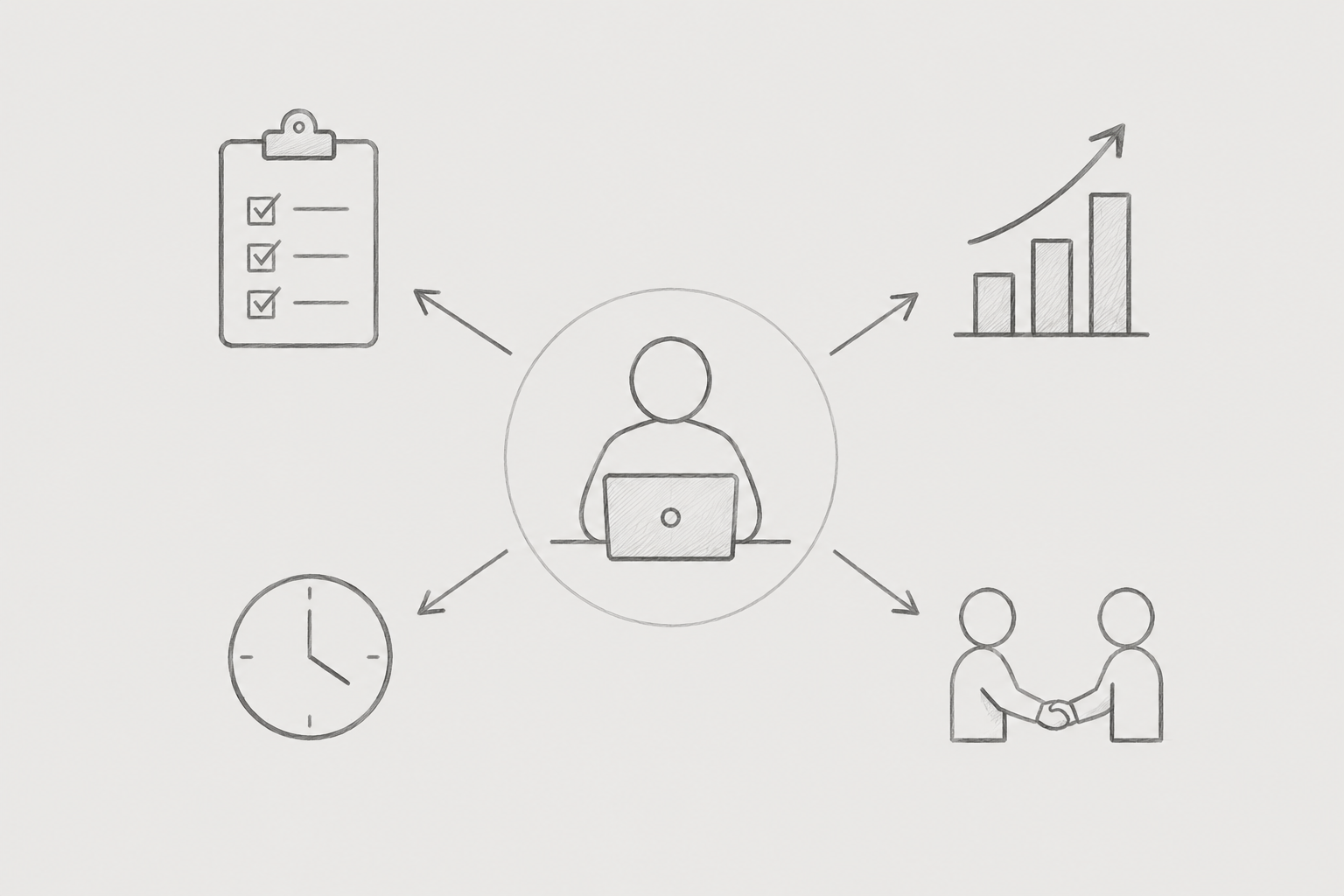
PMO is not just a simple management support organization. It is closer to a core operating organization that supports projects to reliably reach their goals without disruptions. In particular, the recent project environment has become much more complex than in the past.
For example, the following factors are increasing the complexity of projects.
- Increase in agile-based iterative development
- Multi-vendor collaboration environment
- Rapidly changing requirements
- Expansion of cloud and MSA environments
- Shortened project schedule
- High quality requirements
In such situations, it is difficult to manage the project reliably with simple scheduling alone. In fact, a significant number of project failures occur in management areas such as communication issues, schedule control failures, and requirement management failures rather than technical problems.
The PMO serves to minimize these issues by standardizing the project management system, objectively analyzing progress, and early detection of risk factors. In other words, the PMO can be considered a stabilizing device that helps the entire project organization to move within the same criteria and direction.
2. The Power of Operations Created by PMO
The role of PMO goes beyond merely managing meeting schedules or preparing reports. It includes supporting overall project operations and standardizing management systems.
The first role is process standardization.
If the schedule management methods or output formats differ from project to project, it can cause significant confusion in the collaboration process. To prevent this, the PMO defines scheduling management, issue management, quality management, reporting systems, and other aspects as standard processes.
For example, we standardize items like the following.
- WBS writing criteria
- Output Template
- Weekly Report Form
- Issue Management Procedure
- Change Management Process
- Test Management Standards
Through this, project members will be able to perform their tasks under the same standards.
The second role is performance monitoring and reporting.
The PMO continuously collects and analyzes the project's progress status. It comprehensively monitors schedule progress rates, test results, defect occurrence status, risk status, etc., and reports this to management and clients. Especially for large-scale projects, it becomes very difficult to grasp all information at a glance, so the PMO's integrated management role becomes very important.
The third role is risk management.
In the project, various risks such as schedule delays, manpower shortages, technical issues, and changes in requirements can arise. The PMO identifies these risk factors early and establishes response strategies.
For example, if a specific development schedule is continuously delayed, we not only share the status but also review the following countermeasures together.
- Additional personnel involvement
- Prioritization
- Rescheduling
- Reduced scope of functionality
- Discussion with the client
The fourth role is that of a communication hub.
Since there are numerous stakeholders in the project, misunderstandings and conflicts often occur during the information delivery process. The PMO acts as a mediator between the project team, the client, and management, delivering necessary information at the appropriate time and supporting collaboration. As a result, the PMO plays a central role in project operations.
3. Beyond Simple Management: The Capabilities of PMO
Successful PMO operations require more than just basic management skills. A technical understanding and the ability to coordinate between people are both necessary.
The first core competency is an understanding of project management methodologies.
The PMO should understand various development methodologies such as Waterfall, Agile, and Scrum, and be able to apply them according to the project situation. For example, in SI projects, Waterfall-based management is still widely used, but recently, Agile-based iterative development methods are often utilized as well. Therefore, the PMO should understand the advantages and disadvantages of both approaches and be able to adjust them appropriately depending on the situation. Additionally, they should be proficient in using project management tools like JIRA, Confluence, and MS Project.
The second core competency is communication skills.
The PMO plays a mediating role among various stakeholders. For example, the client may demand a fast schedule, while the development team may argue that they need additional time to ensure quality. In such situations, the PMO must find a consensus based on objective data and evidence, rather than an emotional approach. In other words, it should act not just as a simple messenger but as a 'communication translator'.
The third is analytical thinking skills.
PMO is not simply a role of conveying reported numbers. It must be able to identify anomalies within progress data and predict potential risks. For example, even if the progress rate of a specific development part seems normal, by looking at the defect increase rate or the test failure rate together, one can early identify the possibility of schedule delays.
The fourth is quality management capability.
It should be possible to establish and review standards to ensure that project deliverables maintain a certain level of quality. Particularly in large-scale projects, there can be significant variations in the quality of deliverables, making the quality management role of the PMO very important. Ultimately, the PMO can be seen as a comprehensive management role that possesses not only management skills but also technical understanding, analytical abilities, and communication skills.
4. PMO Work Execution Process
The work of the PMO proceeds in the same flow as the Project Life Cycle.
Generally, it can be divided into the following four stages.
- Initiation Phase
- Execution stage
- Control stage
- Closing
In the initial phase, project operating standards are established.
Defines the reporting system, meeting cycles, decision-making authority, and communication channels to create the basic framework for project operations. It also reviews the WBS (Work Breakdown Structure) to ensure there are no missing schedules or unrealistic plans. This stage is crucial because if the criteria are not properly established, the entire project may be jeopardized later on. In the execution phase, the actual project progress is continuously managed. The progress of each development part is collected, and performance is analyzed against the schedule. Weekly and monthly reports are prepared and shared with clients and management, visualizing the project status. It is particularly important to quickly identify schedule discrepancies through Plan vs Actual analysis.
In the control phase, risks and issues are managed intensively.
For example, if a potential schedule delay is detected, we not only share the status but also conduct a root cause analysis and develop a response strategy. Additionally, unresolved issues are quickly communicated to upper decision-makers through the escalation process. This helps prevent the long-term prolongation of problems.
In the final closure stage, we summarize the project results and assetize them.
Supports final inspection to ensure deliverables meet requirements and analyzes success and failure factors of the project. This is summarized in the form of Lessons Learned to be utilized in the next project. In addition, templates, operational know-how, management standards, etc., used in the project are accumulated as organizational assets. In other words, the PMO not only manages the current project but also plays a role in continuously enhancing the overall project capabilities of the organization.
5. PMO in actual project environments
In actual project environments, PMO means more than just a simple management department.
Especially in large-scale SI projects, the atmosphere of the project itself often changes depending on the role of the PMO. In cases where the project is running smoothly, it is mostly observed that the PMO manages schedule, issues, and communication very systematically.
On the other hand, projects with weak PMO functions repeatedly faced issues such as the following.
- Schedule status discrepancies
- Unclear responsibility
- Prolonged issues
- Increasing conflicts with clients
- Occurrence of redundant tasks
- Variation in deliverable quality
The importance of PMO becomes even greater in projects where requirement changes are frequent. While it is not possible to prevent requirement changes themselves, it is essential to quickly analyze the impact of changes and objectively manage their effects on schedule and resources.
Moreover, in recent project environments, it is common to see a mix of Agile and traditional Waterfall methodologies. In such environments, a simple document-centric management PMO is not sufficient; rather, a more flexible and practical coordination ability is required.
For example, the progress of Agile Sprints needs to be connected to the client reporting system, and rapidly changing requirements must be managed in conjunction with the overall project schedule. Additionally, in cloud, DevOps, and MSA-based projects, the technical complexity is also increasing.
Therefore, recently the PMO's capacity to understand not only administrative management roles but also technological trends is becoming increasingly important. Ultimately, the modern PMO can be seen as a complex organization that serves as a 'project operations manager' while also performing the roles of 'coordinator', 'analyst', and 'crisis manager'.
6. Conclusion
The PMO (Project Management Office) is not just a simple project support organization. It is closer to a core operational infrastructure that helps projects achieve their goals reliably.
Especially as project sizes increase and stakeholders become more complex, the role of the PMO becomes even more important. The PMO standardizes project management systems, objectively monitors progress, and detects and responds to risks early.
Additionally, it serves as a communication hub between the project team, the client, and management, mediating conflicts and facilitating collaboration. After the project concludes, it contributes to the overall enhancement of the organization's project capabilities by documenting Lessons Learned and deliverables as assets.
Ultimately, the PMO can be seen as an organization that plays a role in strengthening the sustainable project execution ability at the organizational level, not just for the success of current projects. The project environment is likely to become increasingly complex in the future.
The difficulty of project management will continue to increase, particularly due to digital transformation, the expansion of cloud environments, and the rise of AI-based systems. In such an environment, I believe that the role of the PMO will further develop beyond simple schedule management to become a strategic operational organization.
The roles, key competencies, and work processes of the PMO summarized in this article can serve as useful benchmarks for understanding and operating a PMO in real project environments.
References
• Ministry of the Interior and Safety, NIA, Guide to the Introduction and Operation of Electronic Government PMO, 2021.
• Ministry of Science and ICT, General Standards for Managing Software Business, 2023.
N22-011