
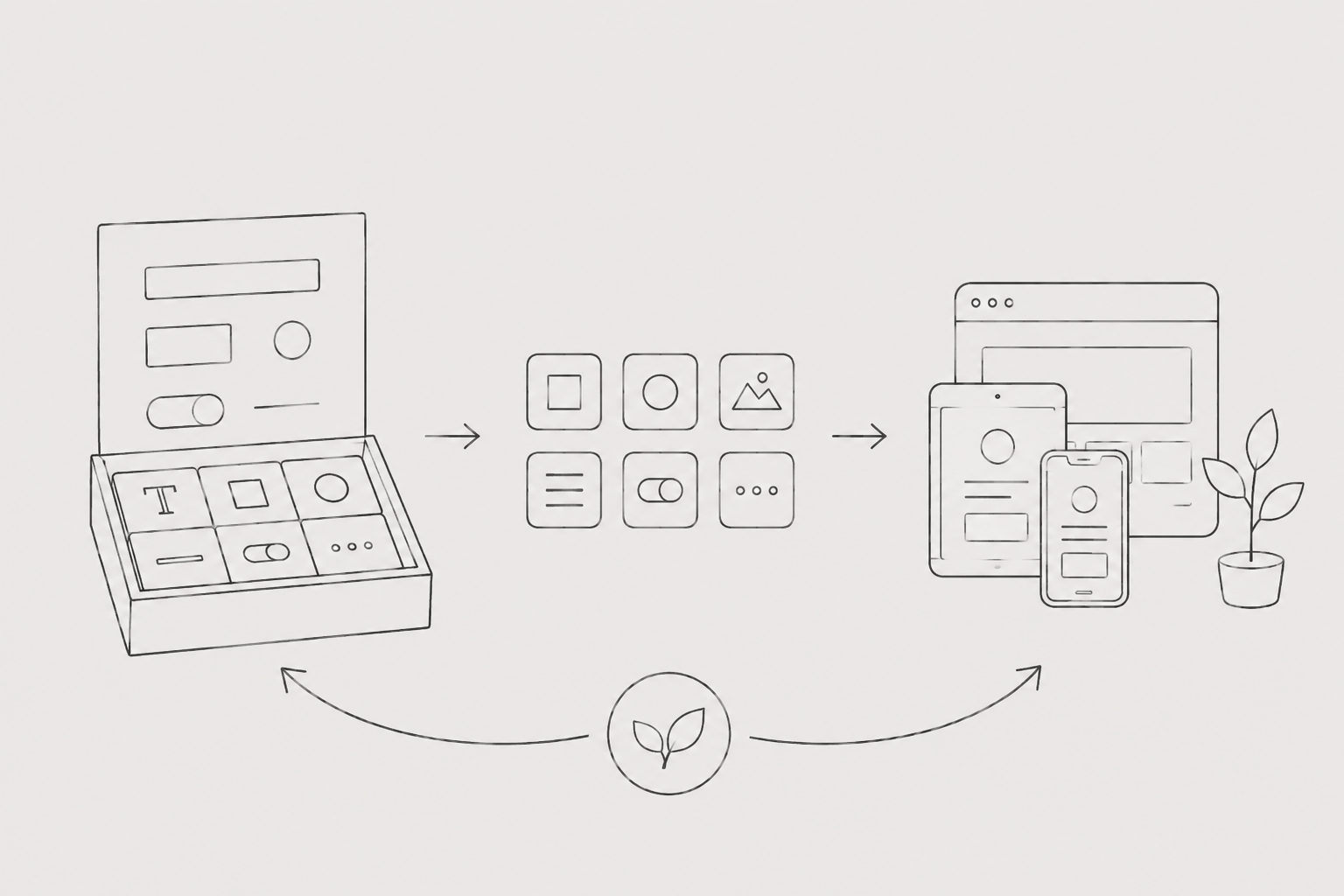
When many teams decide to adopt a design system, the first thing they do is open Figma and start creating components. However, it is not uncommon to witness cases where the system fails to take root in practice and becomes ineffective. This often stems from viewing the design system through a flawed frame. A design system is not just a 'well-organized collection of components'; it is a living product that structurally addresses the inefficiencies of the team.
1. A design system is not a project; it is a product.
Many organizations approach the construction of design systems as a project with a set deadline. They think that it ends once a launch date is established and the completed output is distributed. However, this perspective is one of the most common reasons for inevitably turning design systems into legacy.
Design systems must evolve alongside services. If the system fails to respond to the speed at which new UI patterns emerge, accessibility standards are updated, and technology stacks change, practitioners will begin to circumvent the system. At this moment, the system remains only as official documentation and degenerates into a reference material disconnected from the actual product.
On the other hand, when viewing a design system as a product, a different structure is created. A cyclical structure is formed that incorporates feedback from designers and developers using the system, regularly distributes improvements, and reflects them back into practice. This structure itself is identical to the product life cycle. There is no point at which a design system is 'complete.' It simply continues to improve.
2. The decisive difference between UI Kit and design systems
The most common mistake when first encountering a design system is equating a well-organized Figma component library with the design system itself. However, there is an essential difference between a UI Kit and a design system: is it a 'collection of design assets' or an 'ecosystem where design and development are organically connected'?
A unity of language that goes beyond visual collections
If the UI Kit is a static toolset to enhance a designer's workflow, the design system is a common language shared between designers and developers. It encompasses not just creating buttons, but also includes principles and guidelines on why those buttons are made and in what context they should be used.
In particular, design tokens are a key means of concretely realizing this language. By defining numbers such as colors or spacing with meaningful names, it structurally eliminates interpretation errors between design files and actual code. When communicating as color-primary-action instead of #1A73E8, designers and developers start speaking the same language for the first time.
Extending from static files to live code
The UI Kit exists solely within a design tool called Figma, but the design system must be directly linked to the final output, which is the code. When a designer modifies a component in Figma, the changes should be documented and reflected in development environments like Storybook, ensuring a consistent process all the way to the actual service, at which point the 'system' functions.
In other words, a design system is a framework that goes beyond 'how it looks' to encompass 'how it works and is implemented.'
From the productivity of individual designers to the efficiency of the entire organization.
The UI Kit is more of a tool that assists individual designers in their work. In contrast, a design system is a standard and promise that enables the entire organization to quickly produce UI of the same quality. It serves as a key infrastructure that reduces the exponentially increasing communication costs as the project scales. This difference is the criterion that separates personal tools from organizational systems.
3. Governance and Automation: The structure that keeps the design system alive
What is more important than a well-made component is the governance that operates the system.
When adding a new component or modifying an existing element, if there is no clear approval process, the system gradually loses consistency and becomes contaminated. For example, if each team starts randomly altering button colors or adding new typography styles, the design system will no longer function as a single standard. Governance is the barrier that prevents this problem in advance. There must be a clear flow regarding who proposes change requests, who reviews them, and on what criteria they are approved, so that the system can remain a trusted standard for a long time.
Automation is also a key factor in determining the sustainability of systems. If there is a workflow where design tokens are automatically delivered to the code repository, designers do not need to separately communicate to developers or edit the code themselves when they modify a color value. This automation minimizes management costs and creates an environment where practitioners can focus on the essential experiences of the product.
In conclusion
The starting point of a design system is not flashy components, but solving the team's inefficiencies. Rather than building a perfect system from the beginning, it is more realistic to define the most commonly used elements like buttons, typography, and colors first and then gradually expand from there.
Let go of the idea of delivering a completed product all at once, and focus on defining the core elements that can contribute immediately to practice, while continuously iterating on operations and expansions. This product-centric thinking is key to successfully implementing a design system. The system does not get completed; it grows together with the team.
hrg