
1. Background of the task
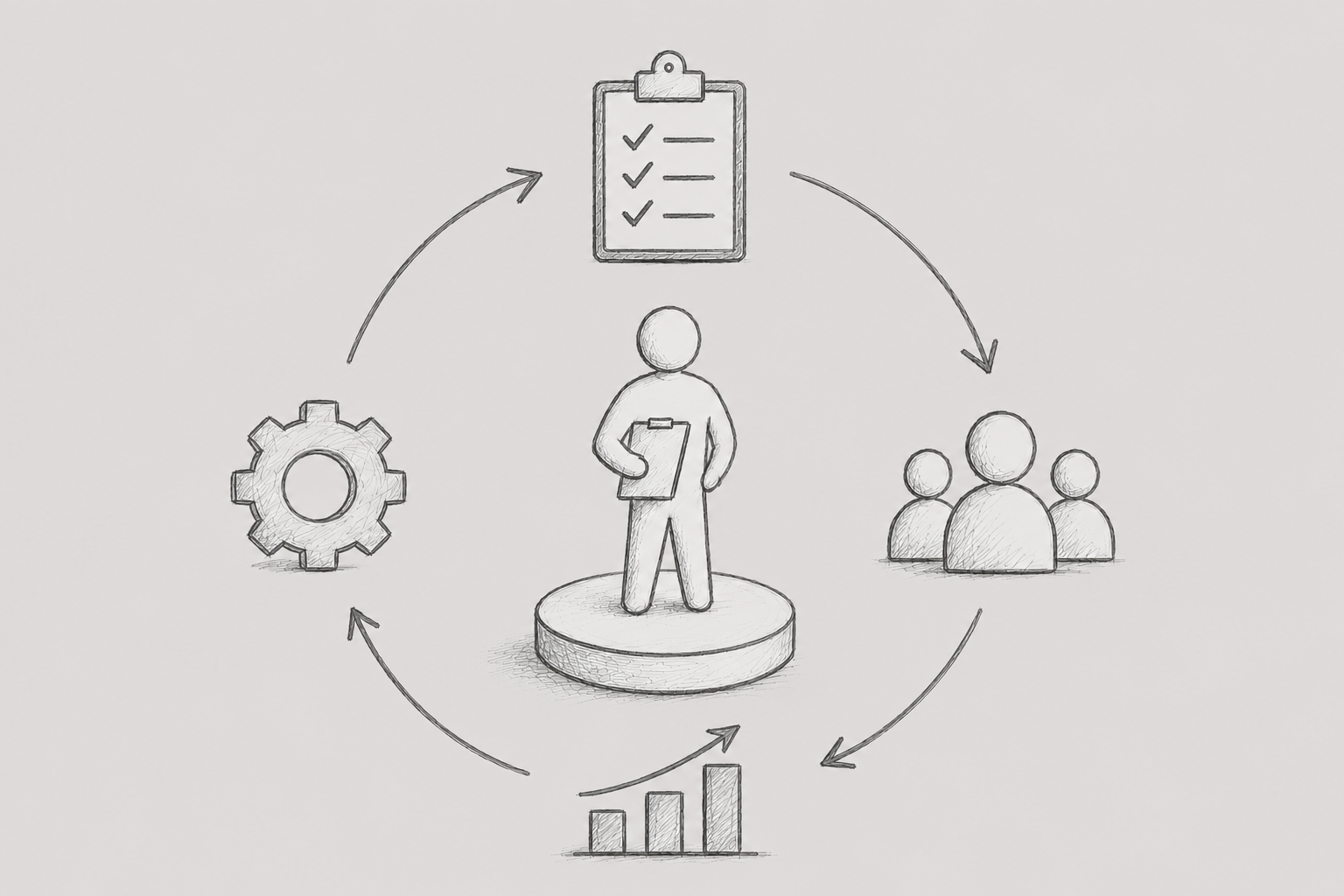
The project is not simply about a few developers implementing features, but rather a collaborative process where various organizations and personnel work together.
Especially in large-scale projects or environments with many stakeholders, such as hospitals, public institutions, and SI (System Integration) projects, the importance of schedule management and communication increases significantly.
As projects grow larger, the number of issues that need to be resolved in management and operations areas, in addition to simple development tasks, rapidly increases.
For example, situations like the following have continuously occurred.
- Multiple meetings conducted
- Collaboration among multiple organizations
- Personnel changes occur
- Need for resource management
- Infrastructure purchasing and ordering tasks
- Customer response
- Document writing and administrative tasks
- Schedule and Risk Management
Initially, the project was operated on a development-centered approach, but as the scale of the project increased, a separate management role became necessary to maintain operational stability.
In particular, in the hospital project environment, various stakeholders such as the client, development team, infrastructure organization, and operations organization moved simultaneously, making information delivery and schedule coordination very important.
Even with just meetings, there were often several held in a day, and if the results of the meetings were not organized and shared, situations often arose where the entire direction of work could change.
Additionally, midway through the project, there arose a necessity to continuously organize work management and personnel operation situations due to personnel changes.
Moreover, during the process of introducing the hospital infrastructure, administrative tasks such as preparing quotations, requesting orders, and communicating with relevant departments also needed to be supported.
Especially in situations where the PM (Project Manager) is absent or away, it was necessary to perform some roles to ensure that there was no operational gap in the project.
For this reason, I took on the role of PMO (Project Management Office) to support the stable operation of the project.
This experience was very meaningful in that it was not just an administrative support role, but one that required understanding and managing the entire flow of project operations.
2. Meeting management and communication support
One of the most fundamental yet important tasks in the project management process was meeting management and communication support.
In large-scale projects, multiple meetings are held simultaneously on the same day.
For example, meetings like the following have been held repeatedly.
- Regular meetings with clients
- Development Progress Meeting
- Issue Response Meeting
- Incident Response Meeting
- Infrastructure Coordination Meeting
- Schedule check meeting
The more meetings we have, the most important thing was 'organizing and sharing information.'
The meeting actually took place, but the results were not clearly organized, leading to frequent misunderstandings among the participants.
To prevent this, I attended key meetings and performed the following roles.
- Summary of the discussion
- Record of the decisions
- Organizing action items
- Sharing schedule
- Designate person in charge
- Manage follow-up actions
Minutes of meetings, in particular, were not just a simple recording task.
This was because it was necessary to clearly summarize who made which decisions, what issues existed, and what follow-up actions were needed.
Due to the large number of stakeholders in the project, any omission in information transfer could lead to delays in the schedule or confusion in tasks.
Therefore, after the meeting concluded, we quickly organized the minutes and shared them with the relevant personnel.
In addition to simple sharing, we organized Action Items separately to continuously track the status of work progress.
For example, if the schedule for actions on a specific issue is delayed, we communicated directly with the person in charge to check the progress and shared it with the PM if necessary.
These processes played a crucial role in maintaining the continuity of the project flow.
In particular, I realized that it is very important to clearly manage 'who does what by when' in an environment where multiple organizations participate simultaneously.
3. Work Environment and Operational Support
In the project, various support tasks were needed to maintain operational stability beyond simple development work.
It was also very important to create an environment where developers could focus on their core tasks, especially in large-scale projects.
During the project, we supported the following operational tasks.
- Attendance Management
- Workforce Status Management
- Seat and work environment support
- Equipment and account requests
- Operation schedule management
- Notice delivery
For example, if new personnel are deployed, a delay in starting actual work may occur if the development environment and accounts are not quickly prepared.
To minimize such situations, we collaborated with the relevant departments to ensure that necessary equipment and system access rights could be smoothly prepared.
As the number of project personnel increased, attendance and operational management became increasingly important.
In particularly strict environments like hospital projects, where schedule management and access control are stringent, it was necessary to continuously organize and manage the status of personnel operations.
For example, if information about vacations, business trips, or fieldwork is not properly shared, it can affect schedule management and resource operations.
Therefore, I took on the role of systematically managing and sharing operational information with the PM.
I realized that what seemed like simple support tasks in this process was actually very closely connected to project stability.
In particular, I experienced that maintaining a stable operational management system as the project prolonged had a significant impact on the overall project atmosphere and productivity.
4. Manpower and Effort Management Support
One of the crucial elements in project operation was the management of manpower and effort.
Especially during the middle of the project, personnel changes occurred continuously.
As new personnel were added and some personnel left the project repeatedly, it was necessary to continuously organize the current staffing and workload status.
The project has undertaken the following tasks.
- Organization of workforce status
- Resource aggregation
- Role and involvement status management
- Share personnel changes
- PM collaboration and operational adjustments
Logistics management was not just simple number organization.
It was a very important task that was directly connected to project scheduling and budget management.
For example, if more effort than expected is投入ed in a specific part, it was necessary to identify the possibility of schedule delays or resource shortages early.
Furthermore, in the client reporting process, the投入ted personnel and effort status were used as very important management indicators.
Therefore, accuracy and timeliness were very important.
In the project, we continuously collaborated with the PM and shared the status of manpower operations.
In particular, when changes to the schedule or personnel reassignment are needed, we discussed the adjustment direction based on the current manpower situation and resource status.
I realized a lot that it's not just a simple management task, but understanding the overall flow of the project and the resource structure is essential.
I also felt that project management is not just about looking at simple development schedules, but it is a comprehensive management where people, costs, and schedules are all interconnected.
5. Support for infrastructure procurement and PM role
The project also supported administrative work related to the introduction of infrastructure.
Especially due to the nature of hospital projects, security and approval processes were very strict, so often work could not proceed with just a simple purchase request.
The project carried out the following tasks.
- Preparation of the estimate
- Create Purchase Order
- Communication with Relevant Departments
- Proceed with approval process
- Coordinate schedule
For example, when new servers or infrastructure equipment needed to be introduced, we collaborated with the relevant departments to prepare the necessary documentation and proceeded with the ordering process.
We also continuously communicated with the hospital's representatives to check on the schedule and approval status.
I was able to feel that administrative tasks are also directly connected to the project schedule in this process.
In particular, quick communication and progress tracking were very important because delays in the infrastructure implementation schedule could impact the entire development schedule.
I also performed some PM roles in situations where the PM was absent or vacant.
For example, I supported tasks such as the following.
- Document preparation and dispatch
- Customer response support
- Schedule coordination for the meeting
- Share operational status
- Issue situation communicated
Of course, I did not perform the entire role of a PM, but I supported to ensure that operational gaps did not occur within the necessary scope.
Through this experience, I realized that project operation is not just the role of a specific person but a structure maintained through mutual cooperation.
In particular, I was able to practically experience that the PMO role is not merely a supportive task but a very important role in maintaining project operation stability.
6. Summary and Impressions
Through this PMO experience, I profoundly realized that the role of PMO in a project goes beyond simple support tasks and is a core function in maintaining operational stability.
Initially, even tasks that seemed relatively simple, such as writing meeting minutes or providing operational support, were actually closely linked to the overall flow of the project.
In particular, I had a lot of experience with the following aspects.
- The importance of information delivery
- The difficulty of schedule management
- Communication coordination skills
- Maintaining operational stability
- Importance of manpower and effort management
- The connection between administrative tasks and project schedules
Above all, I was once again reminded that a project is ultimately a collaboration between people.
I experienced that even the most technically advanced projects can have their operational stability shaken if schedule management and communication are not properly carried out.
I also felt that the PMO plays an important role in coordinating the entire project to ensure smooth operation, not just managing documents.
Especially in an environment where multiple organizations and stakeholders operate simultaneously, organizing information and coordinating schedules can have a significant impact on the stability of the project.
Through this experience, I have been able to look at not only simple development capabilities but also project operation and management perspectives.
Based on these experiences, I aim to continue improving so that I can support project operations in a more systematic and stable manner.