
1. What is Edge Computing?
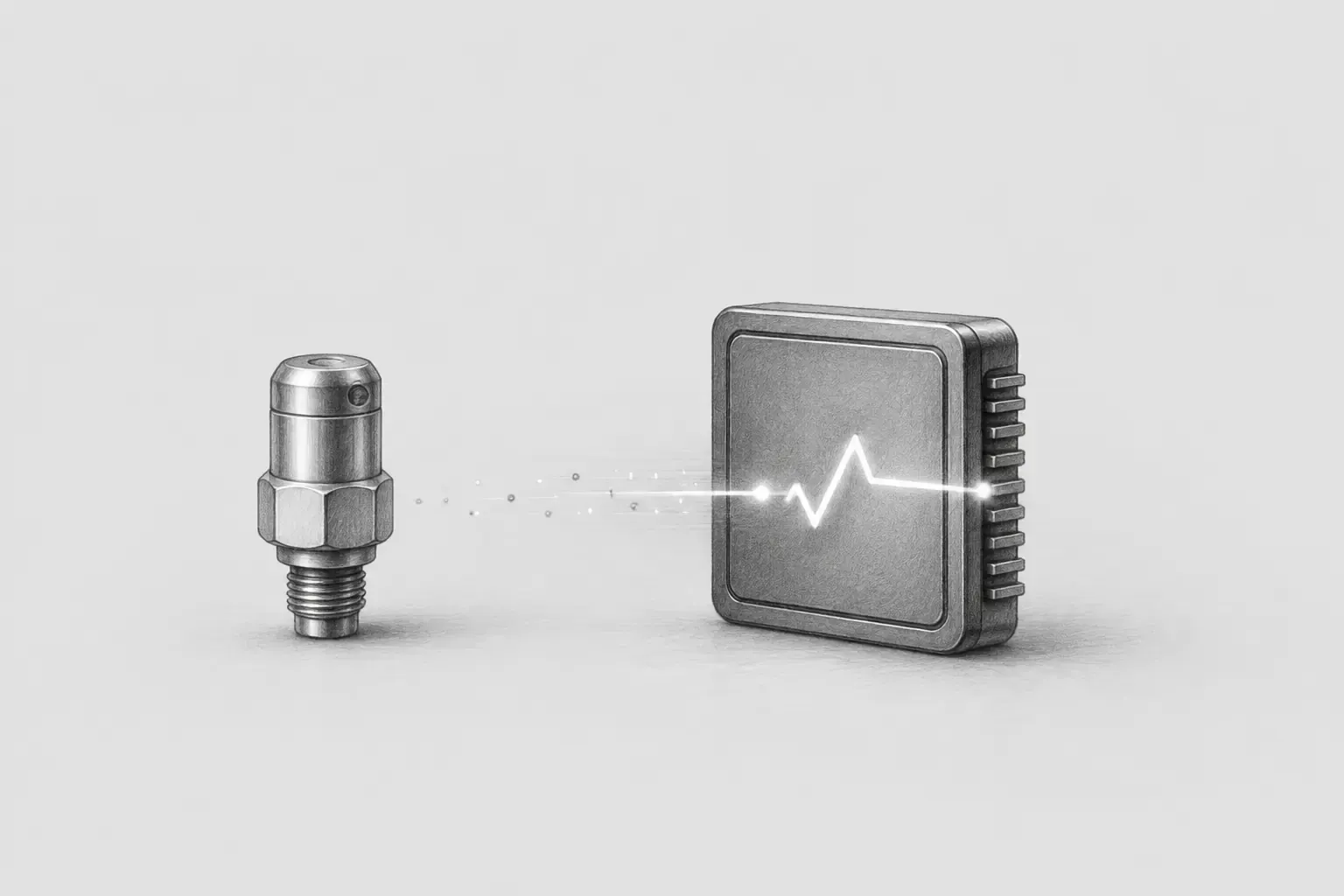
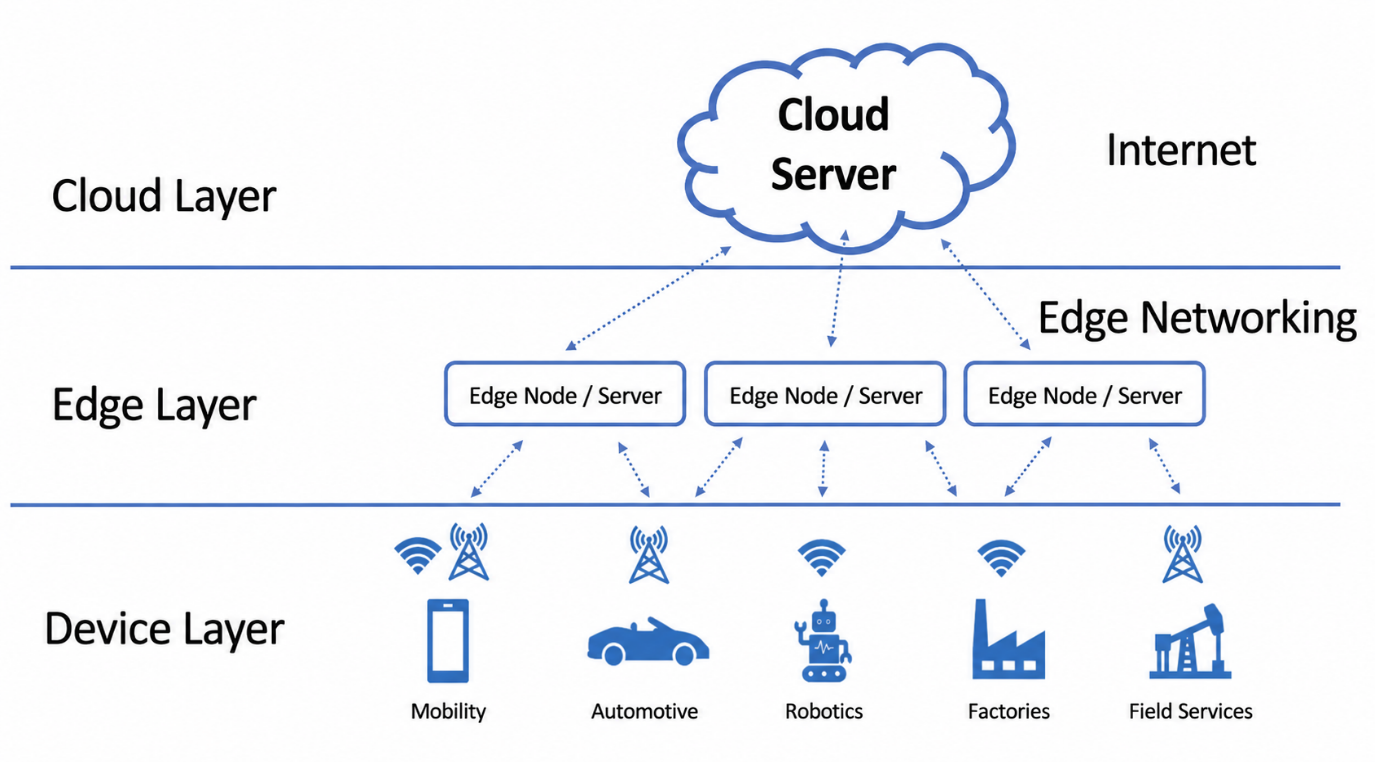
Edge Computing is a distributed computing paradigm that processes data close to where it is generated. Unlike the approach of sending data to a central data center for processing, it places computing resources at the edge of the network to perform tasks such as data collection, processing, and analysis.
By performing the necessary processing close to where data is generated, it is possible to reduce the amount of data transmitted and processing latency. Some functions can also be performed independently even in environments where the network connection to the central system is unstable.
Edge Computing is not an architecture intended to replace the central system, but rather one in which they share responsibilities. Tasks that require data collection or immediate processing can be performed at the Edge, while tasks such as storing large amounts of data or integrating and processing data from multiple sites can be performed by the central system.
2. Why Edge Computing Is Needed in IoT Environments
In IoT environments, data is continuously generated by various Devices, such as sensors and equipment. In an architecture that sends all of this data to a central system for processing, various limitations may arise depending on the data volume and network conditions. Edge Computing can reduce these limitations by processing data close to where it is generated.
2.1 Real-Time Data Processing
In IoT environments, data sometimes needs to be processed quickly. When equipment must be controlled immediately after detecting its status or when an abnormal situation must be addressed, the delay that occurs while sending data to a remote central system and receiving the results back can become a problem.
By processing data directly at the Edge, the round trip over the network can be reduced, allowing functions that require a fast response to be performed on site.
2.2 Dependence on Network Connectivity
In environments where IoT Devices are installed, it is difficult to guarantee that the network connection to the central system will always remain stable. If the central system handles all processing, a problem with the network connection may also affect data processing on the Device.
By configuring the system to perform the necessary functions at the Edge, on-site data collection and processing can continue even when connection to the central system is temporarily unavailable.
2.3 Data Transmission Volume
In IoT environments, many Devices continuously generate data, and Devices that generate data at short intervals can produce a considerable amount of data. Sending all raw data to the central system increases not only network usage but also the processing load on the central system.
By performing data filtering, aggregation, or preprocessing at the Edge, only the necessary data can be sent to the central system, reducing network transmission volume and the processing burden on the central system.
3. Applying Edge Computing to the Customer's IoT Platform
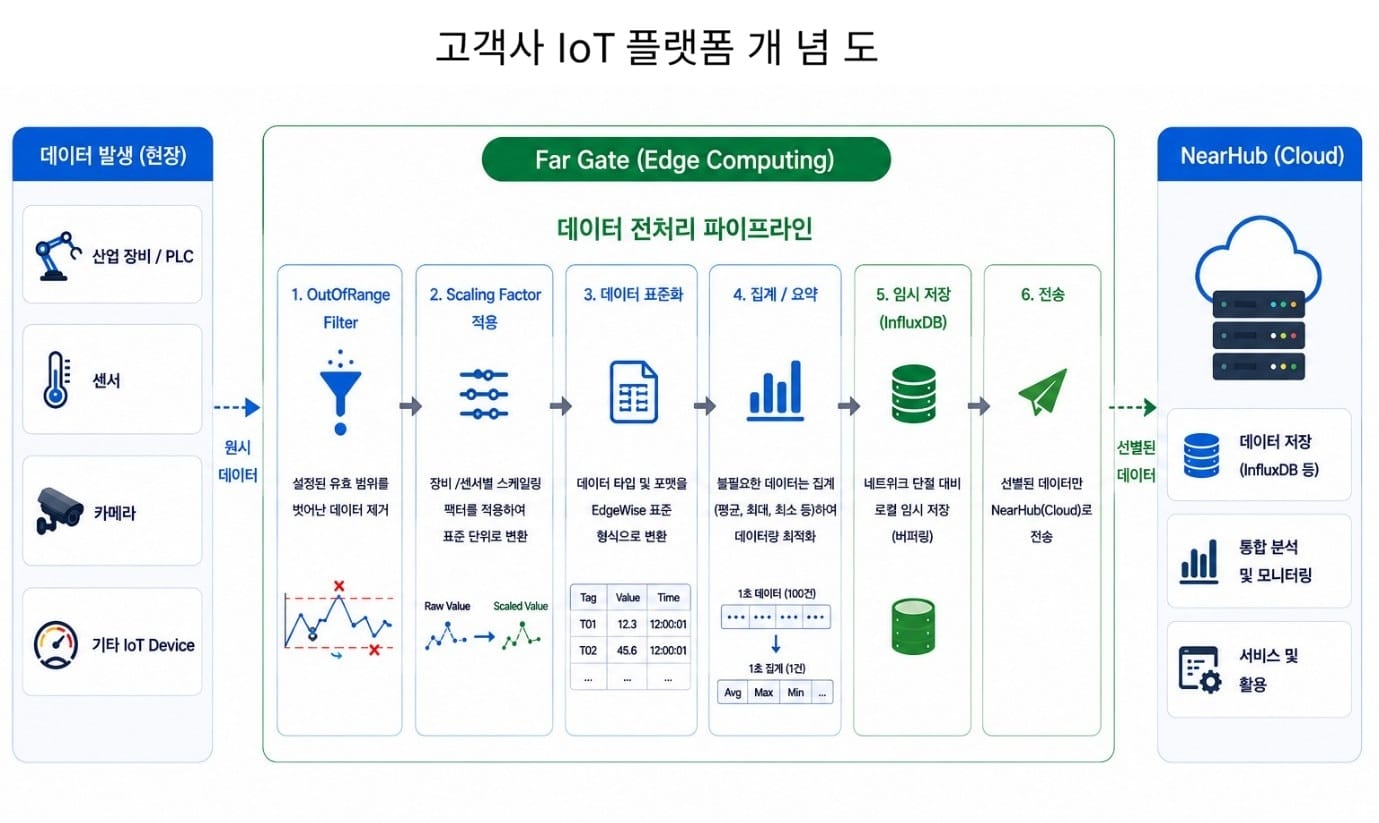
The customer's IoT platform applies an Edge Computing architecture to collect data generated at industrial sites and transmit it to the central system. An Edge Gateway is deployed on site, and data collection from equipment and some processing are performed at the Edge before the necessary data is sent to the central system.
3.1 Early Removal of Unnecessary Data
On the customer's IoT platform, an OutOfRange Filter can be applied when data is collected from equipment to verify its validity. A range of values that can be collected normally is set for each data item. If data outside that range is collected, it is removed at the Edge without being passed on to subsequent processing.
If invalid data is sent all the way to the central system and evaluated there, unnecessary steps—including data transmission, reception, and subsequent processing—must be performed. On the customer's IoT platform, validity is evaluated at the Edge, where data is first collected, so that inappropriate data can be removed as quickly as possible.
This reduces the impact of unnecessary data on subsequent data processing and enables the data sent to the central system to consist primarily of valid data.
3.2 Response to Network Disconnections
The network between the Edge and the central system is not always stable. Even if the network is temporarily disconnected, data collection between the Edge Gateway and on-site equipment can be performed independently.
On the customer's IoT platform, data is temporarily stored in InfluxDB located at the Edge so that data collected from equipment is not lost even when it cannot be sent to the central system. The system is configured to resend the temporarily stored data to the central system once the network connection is restored.
InfluxDB is a time-series database that stores data generated continuously over time, and it is used to temporarily store IoT data collected at the Edge. This prevents a temporary network failure involving the central system from directly leading to the interruption of on-site data collection or data loss.
3.3 Data Transformation and Standardization
On the customer's IoT platform, the necessary preprocessing is performed at the Edge before data collected from equipment is sent to the central system. This includes applying a Scaling Factor to raw collected data to convert it into values used in practice, as well as converting equipment-specific data item names into the standard item names used by the customer's IoT platform.
In this way, the necessary processing is performed at the site where the data is generated, and the system is configured to send consistently formatted, processed data to the central system.
If this transformation were performed in the central system, the central system would need to know even the ways in which raw data is represented for each type of equipment. By performing the necessary transformations on equipment data at the Edge before sending it, the central system can reduce its dependence on the detailed data representation methods used by each type of equipment.
4. Division of Responsibilities Between the Edge and the Central System
Applying Edge Computing does not mean that all functions are performed at the Edge. On the customer's IoT platform, responsibilities are divided between the Edge and the central system based on whether a function is more efficiently performed on site or needs to integrate and process data from multiple sites.
The Edge handles processing that involves direct communication with equipment or must be performed immediately after data is collected. It is also configured to perform functions that must continue regardless of the status of the network connection to the central system.
In contrast, functions such as integrating, storing, or monitoring data collected from multiple sites are performed by the central system. Functions that need to be processed based on data from the entire system rather than an individual site are placed in the central system, enabling multiple Edges to be managed in an integrated manner.
The configuration and management of functions performed at the Edge are also handled through the central system. The central system manages the settings required for data collection and processing and delivers them to the Edge, while the Edge performs actual data collection and processing on site based on the settings it receives.
Ultimately, the customer's IoT platform applies the following basic principle for dividing responsibilities: functions that need to be close to sites and equipment are placed at the Edge, while functions that need to manage multiple sites in an integrated manner and utilize their data are placed in the central system.
genie